
 中文
中文 English

In daily hospital work, disposable isolation gowns, protective suits, and surgical gowns are essential protective equipment for medical staff. However, these three types of equipment often confuse and make it difficult for medical staff to distinguish them. To help you better understand the differences and connections between these three types of equipment, this article will delve into their similarities and differences from multiple perspectives.
Overview of Protective Equipment
Functional Features
Disposable isolation gowns: Designed to protect medical staff from contamination by blood, body fluids, and other infectious substances, while also preventing infection in patients. They provide two-way isolation, protecting both medical staff and patients.
Disposable protective suits: Designed for clinical staff when interacting with patients with Class A or other infectious diseases managed as such. Their function is to protect medical staff from infection and provide single-point isolation.
Disposable surgical gowns: Play a crucial role during surgery. They not only create a barrier between medical staff and patients, reducing their exposure to potential sources of infection, but also effectively block the spread of bacteria, thereby reducing the risk of infection during surgery. This barrier function of surgical gowns is widely considered key to reducing cross-infection from multidrug-resistant bacteria. When to Wear
Disposable Isolation Gowns: When should disposable isolation gowns be worn? These are primarily for work situations involving contact with blood, body fluids, or other potentially infectious materials. Disposable isolation gowns should be worn when working with patients with potentially contagious infections, such as those with multidrug-resistant bacteria. Disposable isolation gowns are essential for the diagnosis, treatment, and care of patients undergoing protective isolation, such as those with extensive burns or bone transplants. Furthermore, disposable surgical gowns should be worn for safety when performing invasive procedures in specialized operating rooms that undergo rigorous sterilization.
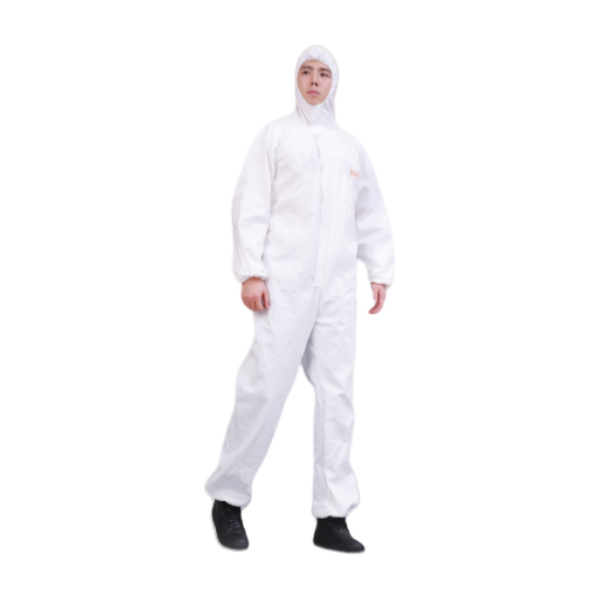
Disposable protective clothing: Commonly used in high-risk areas such as microbiology laboratories and negative pressure infectious disease wards, as well as during outbreaks such as Ebola and avian influenza, their primary purpose is to protect medical personnel from pathogens.
Disposable surgical gowns: These are one-piece garments without a hood. Their cuffs are elastic, making them easy for medical personnel to don while wearing sterile gloves. Surgical gowns not only protect medical personnel from infectious agents but, more importantly, maintain the sterility of exposed surgical areas.
Comparison of Protective Equipment
Appearance and Material Requirements
Disposable isolation gowns are typically made of non-woven fabrics. The material requirements for isolation gowns and protective clothing are distinct, emphasizing impermeability and flame retardancy. It is worth noting that there are currently no specific standards for isolation gowns in China. The relevant content is primarily found in the "Technical Specifications for Isolation Gowns," which briefly describes how to don and doff isolation gowns and specifies that they should have a rear opening that fully covers clothing and skin.
This standard details the liquid barrier properties that protective clothing must possess, including water permeability, moisture permeability, resistance to synthetic blood penetration, and surface moisture resistance. In addition, protective clothing is required to be flame-retardant and antistatic, and key indicators such as breaking strength, elongation at break, and filtration efficiency are clearly defined. Regarding disposable surgical gowns, my country issued the relevant standard (YY/T0506) in 2005, which is consistent with the European standard EN13795. The standard sets clear requirements for material barrier properties, strength, microbial penetration, and comfort. Surgical gowns must be impermeable, sterile, and have a one-piece design.
Donning and Doffing Procedures
Isolation gowns and surgical gowns require specific donning and doffing procedures and precautions to ensure aseptic operation. When donning and doffing isolation gowns, care must be taken to prevent contamination of the clean surface, while surgical gowns prioritize aseptic operation. Furthermore, isolation gowns can be donned and doffed by one person, while surgical gowns typically require assistance. Disposable protective clothing is used in specific high-risk environments, emphasizing the management of contaminated surfaces. Finally, during surgery, medical personnel must follow a strict donning and doffing procedure to ensure their own safety and maintain a sterile environment.