中文
中文 English

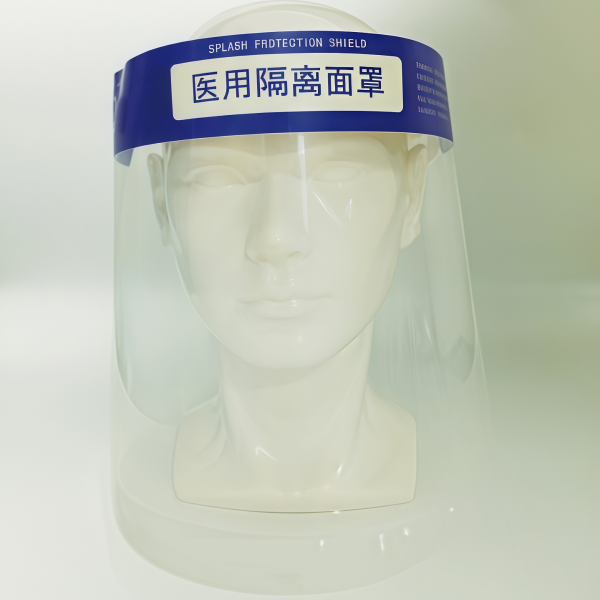
What are medical isolation masks primarily used for?
Personal protective equipment for respiratory diseases and epidemic areas: In crowded settings, the probability of droplet transmission of viruses is very high. Medical isolation masks form a transparent barrier around the protected person's face, not only obstructing vision but also preventing splashing from others, thus preventing possible infection.
Personal protective equipment for those near high-risk suspicious liquids: When splashing suspected blood or body fluids, medical isolation masks can effectively prevent harm from these high-risk factors to the protected person.
What types of medical isolation masks are there?
Classification by product characteristics:
Ordinary head-mounted medical protective masks:
This type of mask mainly consists of a visor, sponge strips, and elastic bands.
The visor, the main functional area, is made of a polymer material and is hydrophobic, splash-proof, and anti-fogging. The sponge strips act as a buffer between the visor and the forehead, and the elastic band, located at the back of the visor, stabilizes the head.
Positive Pressure Protective Mask:
Composed of an air supply unit, a filter unit, and a hood body.
The air supply unit delivers air into the hood, creating a positive pressure with adjustable air speed. A power supply worn at the waist allows for 6-8 hours of operation. The filter unit contains a high-efficiency filter membrane that effectively filters 99.9% of bacteria and viruses, protecting the wearer from infection. The hood body covers the area above the neck and shoulders, isolating the wearer from the outside world.
Application Scenarios